
Best IPTV for Football: What Actually Works
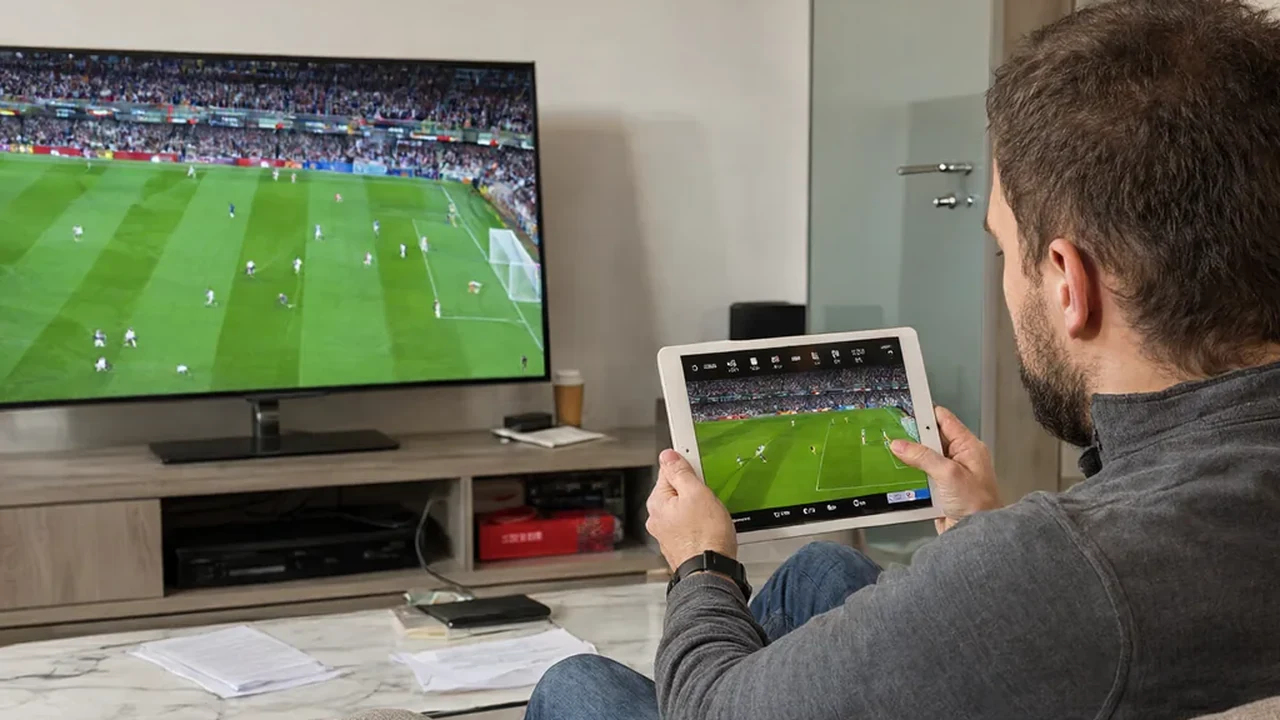
The phrase IPTV covers two very different things. In one sense it means any television delivered over an internet connection, which includes every major streaming service you can name. In the other it means a subscription sold by a reseller, promising thousands of channels for a small monthly fee, usually without any rights to the content. Search results mix the two freely, and the difference matters for picture quality, reliability and what happens when a payment goes wrong. This guide separates them, compares the licensed platforms that actually carry football, and lists the checks that save people from wasting money.
What IPTV really means in 2026
Every streaming platform is technically IPTV. When you watch a Premier League match on a broadcaster's app, the signal arrives over the same internet connection as the illegal services advertised on social media. The distinction is not the technology but the licence: a legitimate service pays for the rights to show a competition in a specific country, which is why it costs what it costs and why it blocks viewers outside that territory.
Unlicensed resellers work by restreaming feeds they have no right to distribute. They are cheap because they carry no rights costs, they are unreliable because they get shut down, and they expose subscribers to payment fraud. In several countries, including the UK, knowingly receiving a broadcast without a licence is a criminal matter for the person doing it as well as the seller.
Licensed services that carry real football
The table below compares the platforms that hold actual rights in major markets. Each covers different competitions in different countries, so the right choice depends on where you live and which league you follow. Prices change often and vary by region, so check the current price before subscribing.
| Service | Football it carries | Devices | Watch out for |
|---|---|---|---|
| Fubo | Premier League in Canada, plus football channels in the US | Fire TV, Apple TV, Roku, smart TVs, browsers | Different catalogue per country |
| Paramount+ | Champions League and Serie A in the US | Wide app support | Televised picks only on cable tier |
| ESPN+ | La Liga and cup football in the US | Wide app support | Some matches need a TV package too |
| Peacock | Premier League in the US | Wide app support | Regional blackout quirks |
| DAZN | Serie A and other leagues in several markets | Wide app support | Line-up differs sharply by country |
The checks that separate good from bad
A legitimate service tells you what it is licensed to show and where. It publishes a terms of service, a company address and a real payment processor. It offers a trial or a monthly plan rather than insisting on a year upfront. Its app is in the official app stores rather than a file you install manually. And it does not promise every league in the world, because no single broadcaster holds those rights.
Red flags are consistent: prices far below the market, an insistence on crypto or bank transfer, no company details, an app distributed as a downloaded file, a channel list in the thousands with no explanation of rights, and a support channel that exists only as a messaging app group. Any one of those is a reason to walk away.
- Check the rights holder in your country before you pay anyone
- Prefer monthly billing until you trust the service
- Confirm the app is listed in the official store for your device
- Test one live match during peak hours, not a demo channel
- Keep a legitimate free-to-air option as a fallback
What quality actually depends on
Most complaints about IPTV picture quality are local network problems, not provider problems. A 4K stream needs roughly 25 Mbps of stable bandwidth, and stability matters more than headline speed. Wi-Fi at the far end of a flat will deliver 200 Mbps on a speed test and still stutter on a live match, because live streams cannot buffer ahead the way on-demand video does. Ethernet, or a mesh node near the television, fixes more streams than any subscription upgrade.
Device matters too. A current Fire TV Stick, Apple TV or Android TV box decodes modern codecs in hardware and handles a 50fps sports stream without dropping frames. An older smart TV app may cap at 30fps, which makes football look slightly smeared no matter how good the source is.
Before committing to a year, run a two-week test on the plan you actually intend to buy. Watch one midweek match and one weekend match, note whether the stream holds for the full 90 minutes, and check whether the guide shows correct kickoff times rather than a generic channel list. That fortnight tells you more than any review, including this one.
Free football that is genuinely legal
Free-to-air broadcasters remain the best value in football. In the UK, BBC and ITV share major tournament coverage and BBC shows Match of the Day highlights. In the US, network television carries a large share of World Cup and international matches, and an indoor aerial picks them up at no cost. Public broadcasters in many countries show selected matches and full highlights packages online, usually geo-restricted to their own territory.
Highlights are free everywhere and appear within an hour of full time on broadcasters' channels and the competitions' own platforms. For a fan who cannot watch every match, a highlights habit plus one subscription for the club you actually support is cheaper and more reliable than any reseller package. Our streaming guides cover device setup, and the Champions League TV section tracks which service holds those rights in each country.
Related guides
Best Streaming Services for Football in 2026
One subscription never covers everything. We map leagues to services so you pay only for what you watch.
2026-09-01
How to Watch Your Football Subscription Abroad
Your home subscription does not always travel with you. The legal routes that actually work on the road.
2026-08-28
How to Watch Several Football Matches at Once
Ten simultaneous kick-offs, one pair of eyes. Multiview, goal-rush shows and second screens that work.
2026-08-25
Football TV Blackouts Explained: The 3pm Rule
Why a Saturday 3pm kick-off is invisible on British TV, and why that rule is now under real pressure.
2026-08-22